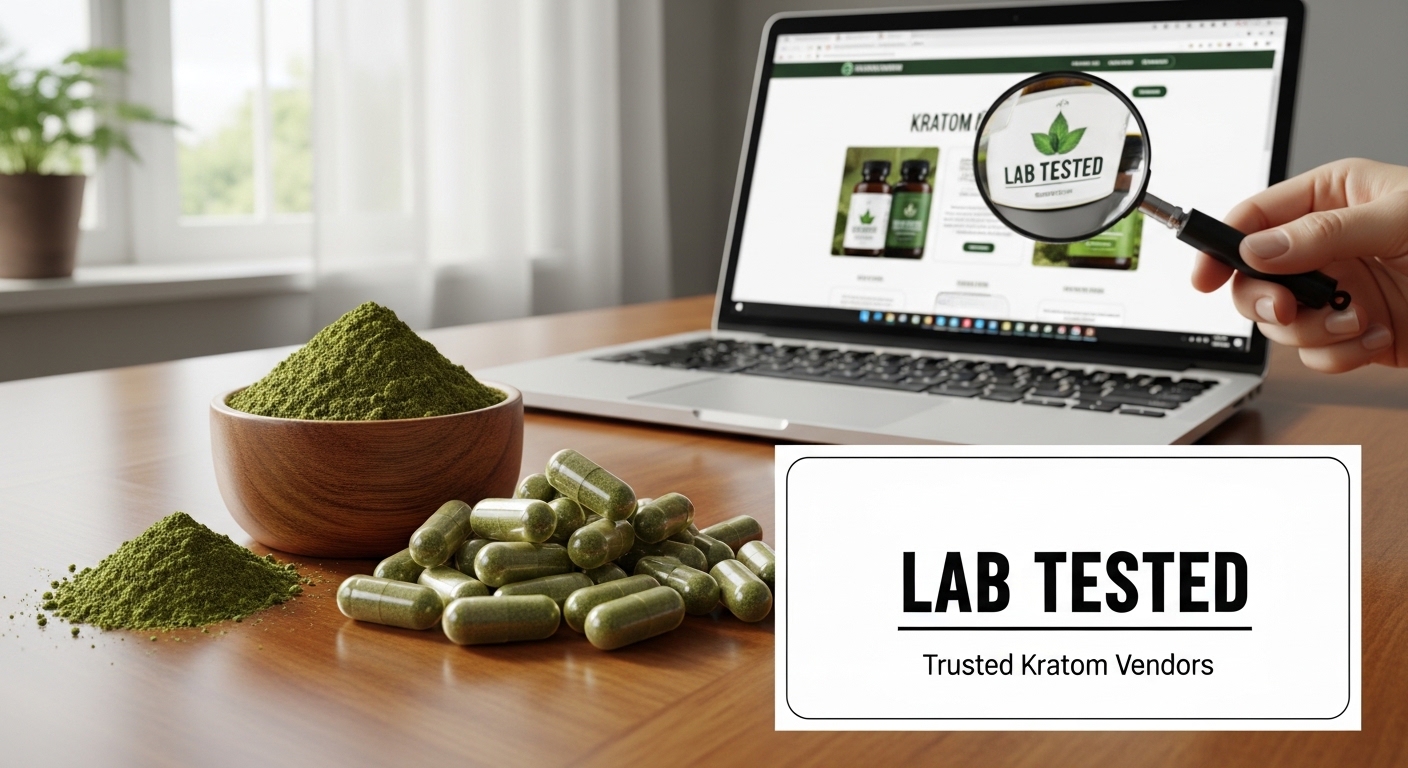
Here’s the thing about buying kratom online in today’s market:
You have no idea what you’re actually getting.
Look, the kratom industry is flooded with vendors making bold claims about purity and potency. But when you dig deeper, most of them can’t even show you a legitimate Certificate of Analysis (COA).
That’s not just concerning. It’s dangerous.
Contaminated kratom has been linked to salmonella outbreaks, heavy metal poisoning, and products laced with synthetic compounds. The FDA doesn’t regulate kratom like pharmaceuticals, which means the responsibility falls entirely on you to find vendors who actually test their products.
So how do you separate the legitimate suppliers from the questionable ones?
It’s simpler than you think. You just need to know what to look for.
What Makes Lab Testing Non-Negotiable
Most people think lab testing is just a marketing gimmick.
It’s not.
Here’s what independent laboratory analysis actually reveals about your kratom:
- Alkaloid content: Confirms mitragynine and 7-hydroxymitragynine levels for consistency
- Heavy metals: Screens for lead, arsenic, mercury, and cadmium contamination
- Microbial contamination: Detects salmonella, E. coli, and other pathogens
- Adulterants: Identifies synthetic compounds or fillers
Without third-party testing, you’re trusting a vendor’s word. And in an unregulated market, that’s a gamble you shouldn’t take.
The best kratom brands understand this. They don’t just test their products—they make those results publicly accessible.
The Red Flags That Scream “Avoid This Vendor”
Before we talk about trusted vendors, let’s address the warning signs.
If you see any of these, run:
No Lab Results Available
If a vendor doesn’t display COAs prominently on their website, that’s your first red flag. Legitimate companies have nothing to hide.
Vague Testing Claims
“Lab tested for quality” means nothing. What lab? What did they test for? When was it tested?
Generic statements without specific documentation are worthless.
Unrealistic Promises
Any vendor claiming their kratom can “cure” diseases or “guarantee” specific effects is violating FDA guidelines and probably lying about everything else too.
Suspiciously Low Prices
Quality kratom sourced ethically and tested properly costs money. If someone’s selling powder for half the market rate, ask yourself what corners they’re cutting.
No Contact Information
Reputable vendors provide phone numbers, physical addresses, and responsive customer service. Anonymous sellers disappear when problems arise.
What Third-Party Lab Testing Actually Means
Here’s where most people get confused.
Not all lab testing is created equal.
Some vendors send samples to their cousin’s garage and call it “independent testing.” The kratom sellers use accredited laboratories that follow standardized protocols.
Look for these specifics:
ISO/IEC 17025 Accreditation
This international standard ensures the lab follows proper testing procedures and maintains equipment calibration.
Batch-Specific Testing
Each harvest batch should have its own COA. A single test from six months ago doesn’t tell you anything about today’s product.
Complete Panel Analysis
Comprehensive testing includes alkaloid profiling, microbial screening, heavy metal analysis, and pesticide detection.
Publicly Accessible Results
The COA should be easy to find on the product page or available via QR code. If you have to email customer service and wait three days, that’s suspicious.
How to Verify Lab Results Are Legitimate
You found a vendor with posted lab results. Great.
But are they real?
Here’s how to verify:
-
Check the lab’s credentials: Google the testing facility. Make sure they’re an actual accredited laboratory, not a made-up name.
-
Match batch numbers: The batch number on your product package should match the batch number on the COA.
-
Look for the lab’s contact information: Legitimate COAs include the laboratory’s name, address, and contact details.
-
Verify the date: Testing should be recent. Results from two years ago are meaningless.
-
Call the lab: Yes, actually pick up the phone. Most accredited labs will confirm they performed testing for a specific vendor.
This might seem like overkwork, but when you’re putting something in your body, five minutes of verification is worth it.
The Transparency Standard for Best Kratom Brands
The vendors worth your money don’t just meet minimum standards.
They exceed them.
Here’s what transparency actually looks like:
Sourcing Information
They tell you exactly where their kratom comes from. Specific regions in Indonesia, not just “Southeast Asia.”
Harvesting Details
Information about leaf maturity, vein color, and processing methods should be available.
Testing Frequency
How often do they test? Every batch? Quarterly? The answer matters.
Money-Back Guarantees
Confident vendors stand behind their products with satisfaction guarantees.
Educational Resources
The best kratom brands provide dosage guidelines, strain information, and safety recommendations without making medical claims.
Understanding Alkaloid Testing Results
When you look at a COA, the numbers can be confusing.
Let’s break it down.
Mitragynine Content
This is the primary alkaloid in kratom. Typical ranges:
- Low potency: 0.5-1.0%
- Average potency: 1.0-1.5%
- High potency: 1.5-2.0%
- Exceptionally high: 2.0%+
7-Hydroxymitragynine Content
This alkaloid is more potent but present in smaller amounts. Typical ranges:
- Standard: 0.01-0.05%
- Higher concentration: 0.05-0.1%
These numbers help you compare consistency between batches and vendors.
The Heavy Metal Problem Nobody Talks About
Here’s something most vendors hope you don’t know:
Kratom naturally absorbs heavy metals from soil.
That’s not the vendor’s fault. It’s basic plant biology.
But it is their responsibility to test for it and reject contaminated batches.
The concerning metals to watch for:
- Lead: Should be below 6 ppm
- Arsenic: Should be below 2 ppm
- Cadmium: Should be below 4 ppm
- Mercury: Should be below 2 ppm
The best kratom brands don’t just test for these contaminants—they source from regions with cleaner soil and implement quality control at every stage.
Why Microbial Testing Saves Lives
Remember the salmonella outbreaks linked to kratom?
That happened because vendors skipped microbial testing.
Kratom leaves are dried in tropical environments where bacteria thrive. Without proper processing and testing, contamination is almost guaranteed.
Reputable vendors test for:
- Salmonella
- E. coli
- Staphylococcus aureus
- Yeast and mold counts
If a COA doesn’t include microbial screening, that vendor is cutting corners in the most dangerous way possible.
The American Kratom Association’s GMP Standards
The American Kratom Association (AKA) created Good Manufacturing Practice (GMP) standards specifically for kratom vendors.
These aren’t legally required, but they’re the closest thing to industry regulation we have.
GMP-qualified vendors must:
- Follow strict processing and handling procedures
- Implement contamination prevention protocols
- Maintain detailed documentation
- Submit to third-party audits
- Display proper labeling
When a vendor is AKA GMP-qualified, it means they’ve voluntarily submitted to rigorous oversight. That’s a powerful indicator of legitimacy.
How to Compare Vendors Side-by-Side
You’ve narrowed down your options to a few vendors.
Now what?
Create a simple comparison chart:
| Criteria | Vendor A | Vendor B | Vendor C |
|---|---|---|---|
| Third-party lab testing | Yes | Yes | No |
| AKA GMP qualified | Yes | No | No |
| Batch-specific COAs | Yes | Yes | No |
| Heavy metal testing | Yes | Yes | Unknown |
| Microbial testing | Yes | No | Unknown |
| Sourcing transparency | High | Medium | Low |
| Customer reviews | 4.7/5 | 4.2/5 | 3.8/5 |
| Price per 100g | Moderate | Low | Very Low |
This visual comparison makes the choice obvious.
The Real Cost of Cheap Kratom
Let’s talk about price.
You can find kratom for ridiculously cheap online. But here’s what that low price actually means:
No Testing
Lab analysis costs money. Vendors who test properly charge accordingly.
Questionable Sourcing
Ethical harvesting, fair wages, and sustainable practices cost more than exploitative supply chains.
Contamination Risk
Cutting corners on processing and storage increases contamination likelihood.
Inconsistent Potency
Without quality control, you have no idea what you’re getting batch to batch.
The best kratom brands charge fair prices that reflect their investment in safety and quality. You’re not overpaying—you’re paying for peace of mind.
Reading Customer Reviews the Right Way
Customer reviews matter, but you need to read them critically.
Look for patterns, not individual experiences:
Red Flags in Reviews
- Multiple reports of contamination or illness
- Complaints about unresponsive customer service
- Inconsistency between batches
- Packaging issues or mislabeling
Positive Indicators
- Consistent praise for quality control
- Mentions of visible lab results
- Responsive customer service experiences
- Long-term customer loyalty
Be skeptical of perfect 5-star ratings across the board. Real businesses have occasional issues—what matters is how they handle them.
The Strain Selection Myth
Here’s something controversial:
Strain names are mostly marketing.
Red, green, white—these vein colors have some scientific basis. But “Maeng Da,” “Bali,” “Borneo”? These are often just names vendors assign to differentiate products.
What actually matters is:
- Alkaloid content (verified by lab testing)
- Freshness
- Processing methods
- Consistency
The best kratom brands are honest about this. They provide alkaloid profiles so you can make informed decisions based on actual chemistry, not exotic names.
Why Vendor Longevity Matters
How long has the vendor been in business?
This isn’t just about experience. It’s about accountability.
Fly-by-night operations can sell questionable products and disappear before consequences catch up. Established vendors have reputations to protect.
Look for:
- At least 2-3 years in business
- Consistent positive feedback over time
- Active presence in kratom community forums
- Transparent business practices
Longevity isn’t everything, but it’s a strong indicator of reliability.
The Importance of Proper Packaging
Quality doesn’t end with the product itself.
Packaging protects your kratom from:
- Moisture contamination
- UV light degradation
- Oxygen exposure
- Cross-contamination
Reputable vendors use:
- Food-grade, resealable bags
- UV-protective materials
- Proper labeling with batch numbers
- Tamper-evident seals
If your kratom arrives in a flimsy plastic bag with a handwritten label, that vendor doesn’t take quality seriously.
What to Do When Something Goes Wrong
Even the best kratom brands occasionally have issues.
What separates good vendors from bad ones is how they handle problems.
Before you order, check:
Return Policy
What if you’re unsatisfied? Can you return unopened packages?
Contamination Protocol
If you suspect contamination, will they investigate? Will they refund or replace?
Customer Service Responsiveness
Send a pre-purchase question. How quickly and thoroughly do they respond?
Complaint Resolution
Check Better Business Bureau ratings and how they’ve addressed past complaints.
A vendor’s true character shows when things go wrong.
Building a Relationship with Your Vendor
Once you find a trusted supplier, stick with them.
Here’s why:
Consistency
You’ll learn how their products affect you specifically.
Customer Loyalty Benefits
Many vendors offer discounts, early access to new products, or special promotions for repeat customers.
Better Communication
Established customers often get priority customer service.
Advocacy
Your feedback helps them improve. Good vendors actually listen.
The kratom market is volatile. When you find quality, hold onto it.
Conclusion
Buying kratom online doesn’t have to be a gamble.
The best kratom brands make safety and transparency their foundation. They invest in rigorous third-party testing, maintain GMP standards, and treat customers like partners rather than transactions.
The unregulated nature of the kratom market means you must be your own quality control inspector. But with the right knowledge, you can confidently identify vendors who prioritize your safety.
What questions do you still have about verifying kratom quality?
Frequently Asked Questions
How can I tell if a Certificate of Analysis is fake?
Verify the testing laboratory’s credentials independently. Call the lab directly to confirm they performed testing for that vendor and batch. Check that the COA includes the lab’s full contact information, accreditation numbers, and specific testing methodologies. Fake COAs often have vague lab names, missing contact details, or generic testing descriptions.
What’s the difference between in-house and third-party testing?
In-house testing means the vendor tests their own products, creating a conflict of interest. Third-party testing uses independent, accredited laboratories with no financial stake in the results. The best kratom brands exclusively use third-party testing to ensure unbiased results and maintain credibility.
How often should kratom batches be tested?
Every single batch should have its own laboratory analysis. Kratom’s alkaloid content and contamination risk vary significantly between harvests, even from the same supplier. Annual or quarterly testing is insufficient—you need batch-specific results for the exact product you’re purchasing.
Are AKA GMP-qualified vendors required to display lab results?
Yes, AKA GMP standards require qualified vendors to make laboratory testing results readily available to customers. If a vendor claims GMP qualification but doesn’t provide accessible COAs, verify their status directly with the American Kratom Association before purchasing.
What should I do if I experience adverse effects from kratom?
Stop using the product immediately and seek medical attention if symptoms are severe. Report adverse events to the FDA’s MedWatch program and contact the vendor with your batch number. Save the product and packaging for potential testing. Legitimate vendors will take your report seriously and investigate the batch in question.